Different Ways They Get In..

5 min read

Not every WiFi attack looks the same. Hackers use a few different tricks to sneak into your connection, and knowing them helps you spot the danger before it's too late. Let's go through them one by one.
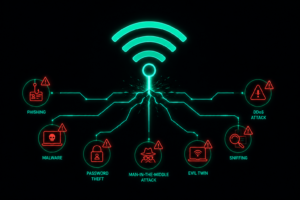
"WiFi signal branching into multiple cyber threat paths representing phishing, malware, password theft, man-in-the-middle attacks, evil twin networks, sniffing, and DDoS attacks."

Click on each (+) sign to reveal each threat

Hackers sometimes create a WiFi network with a name that looks exactly like the real one like "Cafe_Free_WiFi" instead of "Cafe_WiFi." Once you connect, thinking it's official, everything you send passes straight through their device first.

On an unprotected network, data travels in small pieces called packets. With the right tool, a hacker can "sniff" or capture these packets as they pass by, picking out passwords, messages, or anything else that isn't encrypted.

When you log into a website, it gives your device a temporary "pass" to stay logged in. On unsafe WiFi, a hacker can steal that pass and use it to get into your account, without ever needing your password.

Normally, typing a website's name takes you to the real site. In a DNS spoofing attack, a hacker redirects you to a fake version of that site instead, one that looks real but is built to steal what you type.

These attacks might sound technical, but they all rely on one thing: an unsafe connection. The moment you understand how they work, you're already harder to fool.

Next: Staying Safe on Public Networks →